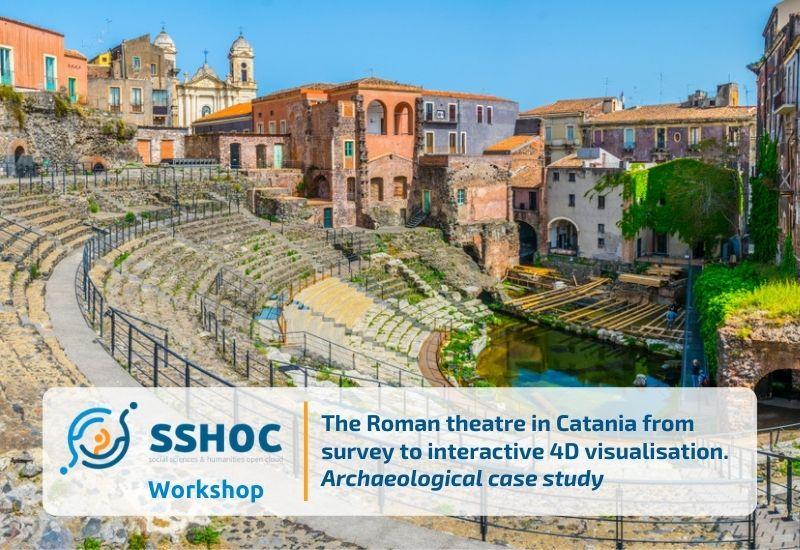
Archaeological field work is a complex process in which scientific resources and competences are allocated for long periods of time, sometimes years. However, the generated data is often either not available in digital form, stuck in data silos or not public. For this reason, the sustainability of archaeological research would benefit immensely from optimized and effective systems of digital documentation, analysis and visualisation of archaeological sites as well as from public, standardised data.
"Checklists for the planning process and timelines for online events AND privacy-compliant configurations for online meetings" are the topic of this month's informal call between members of the SSH Training Community.
The meeting takes place online on 18 May at 14:00 CET and the speakers are Tanya Yankelevich (LIBER) and Veronika Keck (GESIS) and Ricarda Braukmann (DANS).
FAIR data are the pillar of Open Science which is at the core of the SSHOC project. In order to ensure findability of data and other resources, it is crucial to provide easy-to-use recommendations for data citation in the SSH domains.
The first CS3MESH4EOSC webinar, entitled “Science Mesh in High Energy Physics and Endangered Linguistics - Open Data Systems & Data Science Environments” is taking place on 6th May from 11:00 am-12:00 pm CEST. The webinar will showcase how the Science Mesh is integrating both data science environments and open data repositories into the federated Science Mesh, supporting collaboration of distributed science teams across disciplines.
The InGRID2 expert workshop on ‘The Identification and Monitoring of Vulnerable Groups in the Labour Market’ took place online on the 28th and 29th of January 2021. Discussions brought together 49 experts from across Europe and focused on two topics: data harmonization and multi-dimensional indicator building. The workshop was hosted by the University of Amsterdam.
Dataverse is repository software developed by the Institute for Quantitative Social Science of Harvard University to enable researchers to archive and publish research data. It's supported by an active Dataverse Development Community with contributors around the world. From fixing bugs to writing documentation as well as creating integrations and client libraries, the community is a major part of what makes the Dataverse software successful.
The European Open Science Cloud has finally entered its highly-anticipated implementation phase. The EOSC Symposium will provide a key engagement opportunity for the EOSC community.
The CoP is an informal pan-European network for training coordinators in research and e-infrastructures, EOSC-related initiatives and projects. (https://www.openaire.eu/cop-training). The SSHOC training community is a community of trainers active in the Social Sciences and Humanities exchanging good training practices whereas the CoP is more a community of coordinators in training. Of course there is an overlap of activities and people in both communities.