EOSC-hub Webinar: EOSC Early Adopter Programme

29 May 2019

Location: Online


EOSC-hub, one of the key European Open Science Cloud projects, is organizing a webinar to introduce the EOSC Early Adopter Programme on 29 May 2019, 10AM CET and answer questions from those interested in applying.

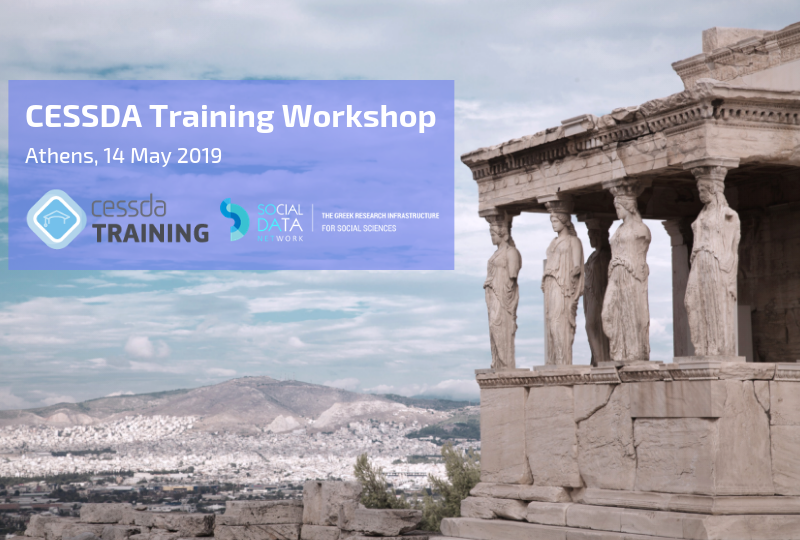
CESSDA Training Workshop: Train the trainer - Athens 2019

14 May 2019

Location: Athens, Greece

The aim of the workshop is to present the Data Management Expert Guide (DMEG), with an emphasis on new materials around RDM, GDPR and Data Discovery. The guide was prepared by CESSDA-ERIC Service providers. CESSDA data management experts will train participants in how to use the developed materials in the delivery of training to their researchers. The training event is designed interactively and includes hands-on exercises.

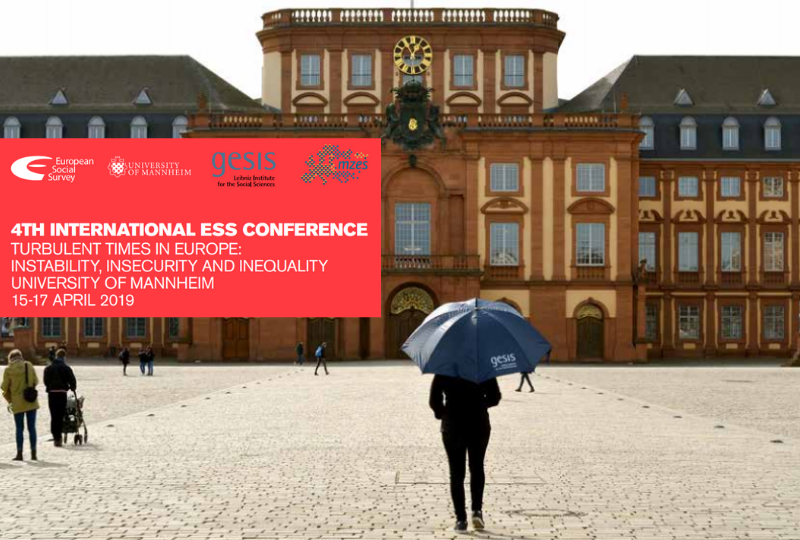
4th International ESS Conference - Turbulent times in Europe: Instability, insecurity and inequality

15 April 2019 to 17 April 2019

Location: University of Mannheim, Mannheim, Germany


4th International ESS Conference

Turbulent times in Europe: Instability, insecurity and inequality


The 4th International ESS Conference - Turbulent times in Europe: Instability, insecurity and inequality - will be held at the University of Mannheim in April 2019. The conference organising committee is led by ESS colleagues at GESIS - Leibniz Institute for the Social Sciences.


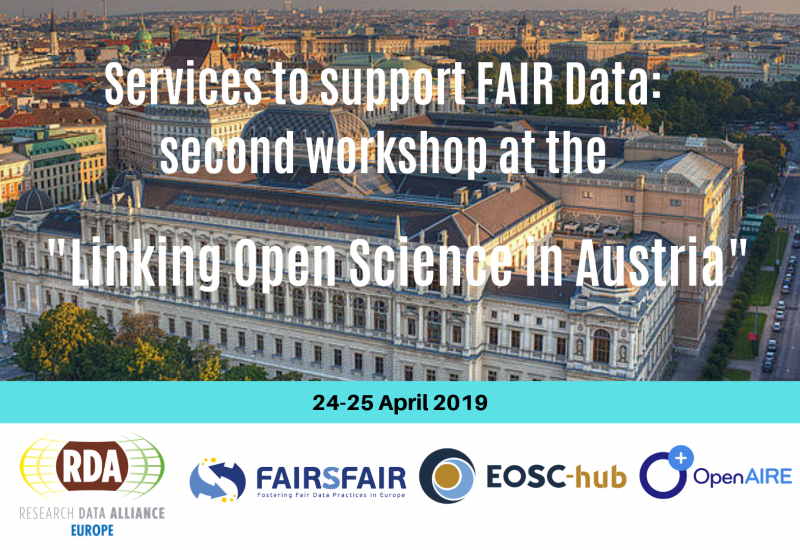
Workshop "Services To Support FAIR Data": Part 2 - Vienna

24 April 2019 to 25 April 2019

Location: Vienna, Austria

OpenAIRE, RDA Europe, FAIRsFAIR and EOSC-hub are holding a series of three workshops, two in April and one in September, called ‘Services to Support FAIR Data’.

After the success of the first workshop at the EOSC-hub Week 2019 in Prague, SSHOC will also be present during the second session of the event "Linking Open Science in Austria", taking place in Vienna on the 24th and 25th of May.

Workshop "Services To Support FAIR Data": Part 1 - Prague

12 April 2019

Location: Prague, Czech Republic

OpenAIRE, RDA Europe, FAIRsFAIR and EOSC-hub are holding a series of three workshops, two in April and one in September, called ‘Services to Support FAIR Data’.

The first workshop in the series takes place at the EOSC-hub Week 2019 in Prague on the 12th of April 2019.

The purpose of this workshop series is to explore how existing infrastructures can work together and understand how to deliver services that support the creation of FAIR research outputs. The three half-day events will examine the scholarly and research ecosystem, what exists, what could be modified, and will give insights into optimum service provisioning. They will also be a chance to engage experts and audiences on how to turn FAIR data into reality.
EOSC-Hub Week

10 April 2019 to 12 April 2019

Location: Prague, Czech Republic

Following the success of last year's edition, EOSC-hub Week is back in its 2nd installment which will take place on 10-12 April 2019 at the Vienna House Diplomat in Prague, Czech Republic. This year, EOSC-hub Week 2019 brings together both present and future service providers and users of the European Open Science Cloud (EOSC). 

LIBER Annual Event Workshop - Social Sciences & Humanities Open Cloud: What’s in it for research libraries?

26 June 2019

Location: Dublin, Ireland

This is a joint session (90 minutes) shared with and co-organised by:

  • the SSH Open Cloud (SSHOC) project
  • the LIBER Digital Humanities and Digital Cultural Heritage Working group
  • the LIBER Digital Skills for library staff and researchers \Working group

Aim of the workshop is to present the SSHOC Project, the SSH Open Marketplace and activities towards building expertise for users, and especially libraries, such as the SSHOC Training Network and toolkit. The presentations will be followed and complemented by asking the workshop attendees to provide their input in an interactive session about their needs on skills building and training.

DARIAH Annual Event 2019: Humanities Data

15 May 2019 to 17 May 2019

Location: Warsaw, Poland

The DARIAH Annual Event 2019 thematizes a catalogue of research questions that arise when we speak of Humanities Data. At the very heart of this topic linger questions around the type and amount of data that humanists collect: what kind of data do we have; where is it; and who owns it? Is our data indeed complex, and if so, what makes it complex? How do definitions and conceptualisations of the term ‘data’ resonate with or, perhaps more accurately, alienate us from our conceptions of our source landscape as art and humanities scholars? And, of course, how will the major European policy initiative to build an Open Science Cloud for research data impact our practices and opportunities?